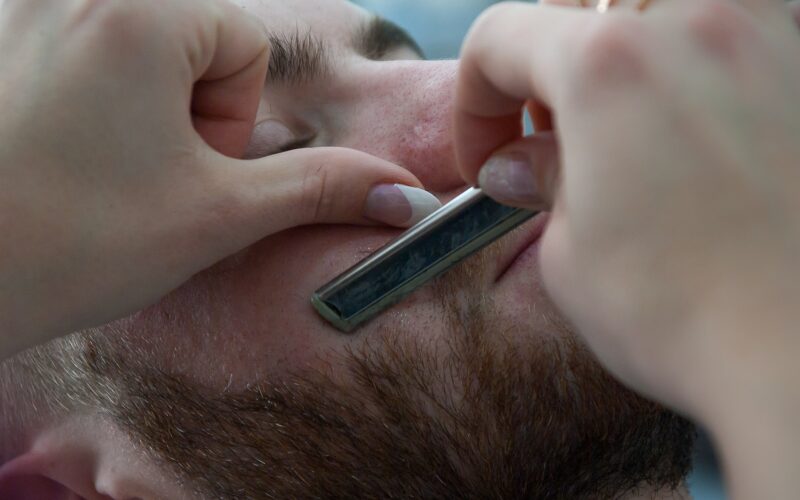
In our society, there are unwritten rules about strength and resilience, particularly for men. From a young age, there is often an expectation to be tough, stoic, and self-reliant—to be "macho." This pressure to project an image of unwavering strength can have a significant downside, especially when it comes to health.
Acknowledging a health problem can feel like admitting a weakness or a vulnerability, a crack in the armour. This form of vanity, rooted in a fear of appearing 'less than', can lead many men to ignore symptoms, delay doctor visits, and avoid necessary treatments, allowing preventable or manageable conditions to worsen in the shadows.
An unwelcome confirmation
One of the most common health issues affected by this mindset is hearing loss. It is often associated with ageing, and for some, admitting to it feels like an unwelcome confirmation that they are getting older.
The idea of wearing a hearing aid can be seen as a visible sign of frailty, clashing with the self-image of a capable, independent individual. This reluctance to address the problem—driven by vanity—has a profound and hidden impact. It is not just about missing a few words; it is about the slow erosion of connection, confidence, and cognitive health that occurs when the world's sounds begin to fade.
What is hearing loss?
At its most fundamental, hearing loss is a reduced ability to perceive sounds. It is not simply a matter of the world becoming quieter; it often involves a significant loss of clarity, making it incredibly difficult to distinguish speech from background noise. To understand this condition, it helps to appreciate the remarkable journey sound takes through the ear. Sound waves are gathered by the outer ear and channelled to the eardrum, causing it to vibrate.
These vibrations are amplified by three tiny bones in the middle ear and passed to the cochlea, a fluid-filled, spiral-shaped organ in the inner ear. Inside the cochlea, thousands of microscopic hair cells translate these physical vibrations into electrical signals, which are then sent along the auditory nerve to the brain for interpretation. Hearing loss occurs when there is a disruption at any point in this complex pathway.
Natural ageing process
There are three primary classifications of hearing loss. The most prevalent is sensorineural hearing loss, which results from damage to the inner ear—the cochlea or the auditory nerve itself.
The delicate hair cells within the cochlea are especially vulnerable and, once damaged, they cannot regenerate. This type of loss is most frequently caused by the natural ageing process (presbycusis) and, increasingly, by cumulative exposure to loud noise. It typically affects the ability to hear high-frequency sounds first.
This is why individuals may initially struggle to hear consonants like 's', 'f', and 't', making speech sound muffled and conversations, particularly in noisy environments, a significant challenge. Other causes include genetic factors, certain viral infections, and some medications that are toxic to the ear.
Minor surgical procedures
The second type is conductive hearing loss. This is a mechanical issue where sound waves are blocked from reaching the inner ear efficiently. The problem lies within the outer or middle ear. Common causes include a build-up of earwax, fluid in the middle ear from an infection or allergy, a perforated eardrum, or damage to the small bones of the middle ear.
Conductive hearing loss tends to make all sounds seem faint or muted. A crucial difference from sensorineural loss is that conductive hearing loss is often temporary and can be fully resolved through medical treatment or minor surgical procedures, like removing the blockage or repairing the eardrum.
The consequences of untreated hearing loss
The third category, mixed hearing loss, is a combination of both sensorineural and conductive components.
A person with mixed hearing loss has damage in their inner ear as well as an obstruction or dysfunction in their outer or middle ear. For instance, an older adult with age-related hearing loss might also develop an ear infection that causes fluid build-up. Treatment would aim to address both issues, though the sensorineural element is permanent. The consequences of untreated hearing loss are extensive and go far beyond the ears.
The constant strain of trying to hear places a heavy cognitive load on the brain. This sustained mental effort has been linked by numerous studies to accelerated cognitive decline, an increased risk for dementia, social isolation, and depression.
Coping with hearing loss
Receiving a diagnosis of hearing loss can be a deeply personal and emotional event. For many, it confirms a change in their connection to the world, which can trigger feelings of denial, anger, and sadness. The sounds that once brought joy—the voice of a loved one, a favourite piece of music—may now seem distorted or faint. The initial and most crucial step in coping is to acknowledge these feelings.
Allowing yourself to process this change is a healthy and necessary part of the adjustment. Sharing your experience with supportive family, friends, or a dedicated support group can provide immense comfort, reminding you that you are not on this journey alone and fostering a sense of community.
Make conversations easier
Developing practical coping strategies is vital for navigating the challenges of daily life. Communication is the most immediate area requiring adaptation.
It is important to be open and forthright about your hearing loss with those you interact with regularly. Educate them on how they can make conversations easier for you. Simple adjustments, such as facing you when speaking, talking at a normal pace and volume, and rephrasing a sentence instead of just repeating it louder, can make a profound difference. Taking control of your listening environment—by moving to a quieter area in a restaurant or turning down background music during a conversation—is an empowering act, not a sign of weakness.
Exploring skills like speech-reading (lip-reading) can also be beneficial, providing visual cues to help fill in any auditory gaps.
Follow the dialogue without straining
Beyond interpersonal strategies, coping also means embracing technology and adapting your environment for better safety and accessibility. A wide array of assistive listening devices is available. Amplified telephones, specialised alarm clocks that use flashing lights or vibrations, and doorbell systems with visual alerts can ensure you stay connected and aware. When watching television or films, using subtitles and closed captions is a simple yet effective way to follow the dialogue without straining.
It is also important to become a self-advocate in public venues. Many theatres, places of worship, and lecture halls are fitted with hearing loop (or induction loop) systems, which transmit sound directly to telecoil-equipped hearing aids. Coping is an ongoing process of learning and adapting to ensure you remain fully engaged in life.
Managing hearing loss
While coping helps you adapt, managing hearing loss involves taking proactive, long-term steps to treat the condition. This journey should always begin with a comprehensive hearing assessment from a qualified audiologist. This evaluation is far more detailed than a basic screening, involving a battery of tests to precisely identify the type, degree, and specific pattern of your hearing loss.
The results are plotted on an audiogram, which serves as a detailed blueprint for a personalised management plan. This plan will be tailored to your specific hearing needs, lifestyle, and communication goals, with your audiologist acting as your partner in the process.
Directional microphones that focus on speech in noise
For the vast majority of people with sensorineural hearing loss, hearing aids are the cornerstone of management.
The vanity that prevents many from considering them is based on outdated perceptions. Today’s hearing aids are discreet, powerful microcomputers. They are custom-programmed by an audiologist to amplify only the specific frequencies you struggle with, restoring clarity and balance. Advanced models feature directional microphones that focus on speech in noise, automatic feedback cancellation, and even artificial intelligence that adapts to your environment.
Bluetooth connectivity has been a game-changer, allowing you to stream phone calls, music, and TV audio directly to your ears, turning your hearing aids into personalised headphones. Successfully adapting to them requires patience—a period known as acclimatisation—as your brain readjusts to hearing sounds it has been missing.
Post-operative therapy
For individuals with severe or profound hearing loss where hearing aids offer insufficient benefit, a cochlear implant may be an option.
This is a surgically implanted device that bypasses the damaged hair cells in the cochlea and stimulates the auditory nerve directly. It does not restore normal hearing, but it can provide a sense of sound that enables a person to understand speech. This path requires surgery and extensive post-operative therapy but can be life-altering. Alongside treatment, a critical part of management is hearing preservation.
This means actively protecting your ears from further damage by avoiding loud environments or using hearing protection. Effective management is a partnership with your audiologist, empowering you to reconnect with the world.
An illusion of flawless strength
The hidden impact of vanity is the quality of life that is lost while trying to maintain an illusion of flawless strength. True strength lies not in ignoring a problem, but in having the courage to face it and take control. Addressing hearing loss is not a sign of weakness; it is a powerful act of self-preservation.
Letting go of outdated notions
Choosing to manage your hearing health is a choice to remain connected—to your family, your friends, and your passions. It is about prioritising genuine well-being over a fragile facade. By letting go of outdated notions of what it means to be strong, we can embrace the support and technology available and continue to live life to the fullest.